Kitchen Respraying glossary of terms & specifications
14 technical terms, material grades and Irish standards explained in plain English so you know exactly what is on a written quote.
Sorted A to Z for quick reference when comparing specifications.
Free, no obligation. One specialist kitchen resprayer covering your county replies, not five.
Key kitchen respraying terms explained
10% / 20% / 30% Sheen Level
The gloss measurement of cured cabinet lacquer: 10% dead-matt gives a velvety heritage chalk look, 20%–25% satin-eggshell is the most popular wipe-clean family finish, and 30% is a soft semi-sheen.
2-Pack (2K) Acid-Catalysed / Polyurethane Lacquer
Industrial furniture coating mixed with a chemical hardener before spraying so it cures into a rock-hard, scrub-proof, grease- and steam-resistant factory skin.
Chemical Degreasing Wash
The critical first step where decades of invisible cooking oil, silicone polish and wax around the extractor hood and kettle are stripped off before any sandpaper touches the door — preventing paint fisheyes or peeling.
Dust-Free Extraction Sanding
Orbital mechanical keying of doors and fixed gables hooked up to a HEPA vacuum extractor so zero wood dust escapes into your kitchen.
Foil-Wrap Stripping (Peeling Vinyl Doors)
Heating and peeling away failing PVC/vinyl vacuum wrap around kettle and oven doors to expose the solid MDF core underneath, which is then sealed with high-build isolators and resprayed.
Grain-Fill vs Open-Grain Respray
On solid oak, ash or pine doors, a high-build primer can either fill the timber pores for a smooth contemporary satin finish or leave the natural wood grain texture visible beneath the colour.
Handle-Hole Filling (2-Part Epoxy)
Filling old handle drill holes with non-shrink two-part automotive/joinery resin flush with the timber before priming so you can switch from single knobs to wider cup pulls or bar handles.
High-Build Isolating Primer
Two coats of sandable two-pack primer-surfacer that block wood tannins from bleeding through pale whites and form a glass-smooth base for the colour topcoats.
HVLP / Air-Assisted Airless Spray Gun
High-Volume Low-Pressure fine-finish atomising equipment that lays down a uniform micron thickness with zero brush marks or orange-peel roller texture.
Masking Tunnel & On-Site Extraction
Sealing off worktops, floors, appliances and internal cabinet shelves with electrostatic film and kraft paper while running a portable filtered extraction fan for the 1 day of on-site frame spraying.
Numbered Hinge Indexing
Stamping or tagging every removed door, drawer front and hinge plate during collection so each door returns to its exact original carcass opening and alignment.
Spectrophotometer Colour Matching
Digitally scanning or mixing any Farrow & Ball, Colourtrend, Little Greene or RAL shade directly into durable 2-pack furniture lacquer.
Two-Tone Island Contrast
Spraying the perimeter wall cabinets in a warm light neutral (such as Skimming Stone, Slaked Lime or Ivory Tusk) and the central island or pantry in a deep contrast shade (Railings, Studio Green or Hague Blue).
UV Non-Yellowing Clear / Pigmented Topcoat
Aliphatic resin chemistry that keeps bright whites and pale greys crisp for 8–12+ years without yellowing around south-facing patio doors.
Real examples and installation detail
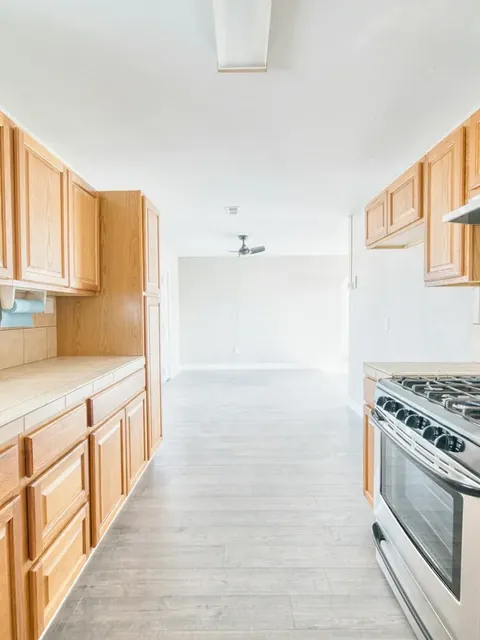
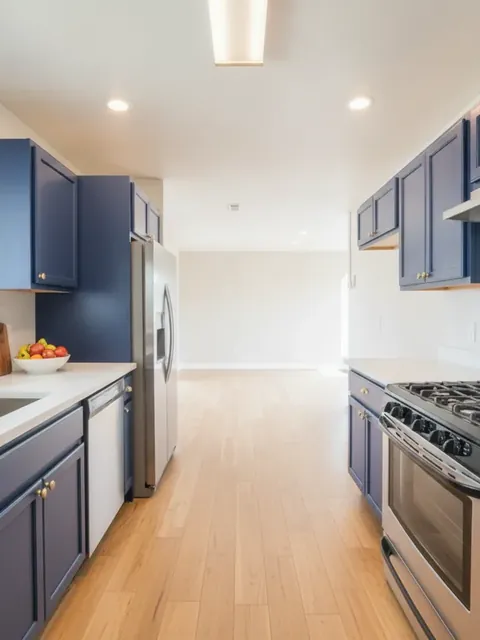
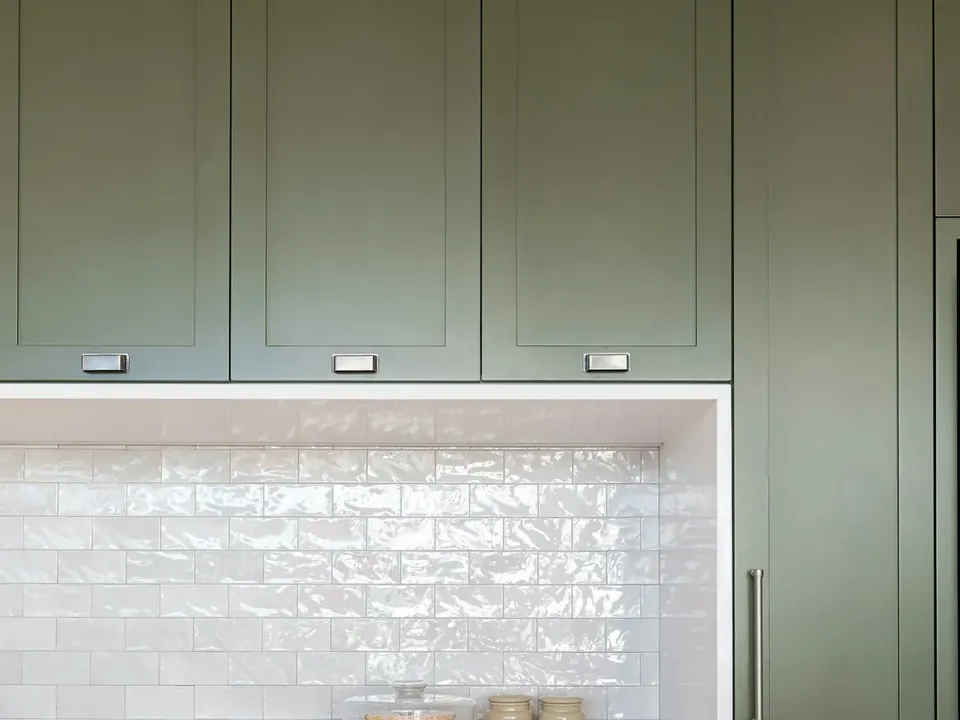
Get a kitchen respray quote in your county
Pick your approximate door count, current finish and county. Your enquiry goes to one specialist kitchen resprayer covering your county for a fixed written price.
Questions homeowners ask
How much does it cost to respray a kitchen in Ireland?
In Ireland, respraying a small kitchen (up to 10 doors and drawer fronts) costs €700 to €1,000. A standard medium family kitchen (10 to 20 doors) costs €1,250 to €2,000, and a large kitchen with an island and tall larder run (20 to 35+ doors) costs €2,000 to €4,500. That saves 75% to 85% compared with a €10,000 to €20,000 new fitted kitchen.
Do you spray the doors on site or take them away?
Specialist kitchen resprayers do both: all removable doors, drawer fronts and kickboards are unscrewed and taken to a temperature-controlled, dust-extracted workshop spray booth for degreasing, sanding, priming and 2-pack spraying. Then the team spends 1 day on site masking your room and spraying the fixed end panels, pelmets, cornices and face frames so everything matches.
Can you respray a dark solid oak or orange pine kitchen?
Yes — solid oak, ash, maple and pine kitchens are the single best candidates for respraying because the timber doors and hinges are built to last decades. Two coats of high-build blocking primer seal the wood tannins so no yellow knots bleed through, leaving a smooth satin finish while keeping a subtle whisper of natural woodgrain.
Every guide, calculator and county page
Jump straight to any specification guide, our interactive calculator, the technical glossary or your county page.
Price & Specification Guides
Calculator, FAQ & Glossary
Want an exact price to respray your kitchen?
One specialist kitchen resprayer covering your county prices your doors, end panels and any handle changes in writing.